

Some Background:
An immigration officer has committed another atrocity as federal officials explain it away. During a peaceful protest in Minneapolis, several ICE agents shot and killed Alex Jeffery Pretti, a US citizen. Many rounds were fired by the officers. For more detailed reporting on the shooting, read The New York Times’ overview here and their live updates here. After witnessing video analysis of the killing of Renee Good in a similar January 7th shooting involving an ICE agent and an unarmed woman, many Americans feel ICE has overstepped its authority. This display of unnecessary force has left the nation in a state of disbelief.
The Illusion of a Strong Man:
The Department of Homeland Security has unfurled a web page for ICE. Other than a checkerboard of mugshots and an FAQ deceptively describing how ICE probably-doesn’t-really need a warrant to raid homes, the site is sparse. It seems like they couldn’t get a competent web designer. The site really sucked, even for the Trump administration.
I left the site with a grim smile, however, because at the top of the page sat a prominent banner with the words “worst of the worst.” This is, of course, a reference to some gross political rhetoric justifying evil actions, but I can’t help but read it as a self-labeled identity. ICE agents are the worst of the worst. They are the worst of the worst of the worst of us.
Now, mind you, I said “of us” as in “one of us.” As unpleasant as they seem to be, the truth is, every member of ICE is one of us. They are humans with human features and thoughts. They are not beasts or an elite force. They aren’t superhuman, not even in one single way. More on this later.
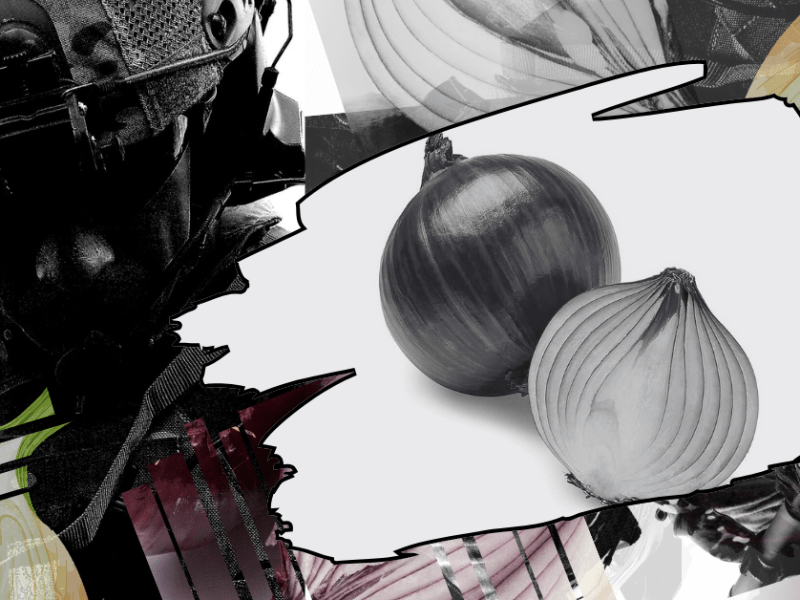
The satirical news site The Onion says it all best. In one hilarious post, which you can read here. The Onion writes about Clements a dummy ICE agent they created for the joke. “[Clements] was making fast friends with his fellow ICE agents for the same reason that he was estranged from his wife and had been abandoned by virtually all other acquaintances.” As in all of their portrayals of ICE, The Onion doesn’tmake Clements sound cool or dangerous. He’s not even a super villain. Instead, he sounds like a loser. Which is a very human trait, actually.
It’s easy to envision ICE (and really anyone with authority) as soldiers, strong and dangerous – covered in gear, guns at their sides. This is just wrong, though. Their authority, their venom melts away when you watch videos of the raids, see what they really look like. And they look…smelly…among other things.
Check out my analysis of The Onion and ICE
Their tactical belts are askew, all the gear is too heavy, they’re disheveled, and their pants look like they’re about to fall down. Some pictures show agents shying away from clouds of their own pepper spray. Their faces are bored or haunted, depending on the city. To me, they look scared and small. There is no bravery here. No strength.
Renee and Alex may have looked ICE in the eye, with no fear, but ICE is very scared of their legacy. It’s not just the victims (and their god, I suppose) who judge them. Thousands of Americans abhor their actions based on principles we’d all like to share. Almost everyone believes they care about goodness, truth, and righteousness. How must it feel to be forced to see that you are not morally right or justified? How do you hide from the videos on social media?
What could a jumbled team of small, smelly men possibly feel in the face of waves of protesters who know what they saw and want to stop you from doing again? Their insides can’t possibly be holding up well to the heat of civil resistance and onslaught of protesters holding signs that, come to think of it, really do have a point.
The wave approaches. It must be gutting, terrifying to behold.
The Analytical Power of Empathy:
Empathy isn’t always love and acceptance; it’s a dynamic analytical tool. It may be detestable to spend time with someone else’s brain worms, especially if they are doing you harm, but it’s well worth it. Through empathy, we can gain important insight that helps us understand – well, everything. Believe it or not, analytical empathy can actually help you do your math homework or fix your car! More importantly, empathizing with the henchmen can help topple the whole dang crew of villains. That’s right, we don’t have to like a person or even wish to accept them to benefit from exercising empathy. In today’s political climate, understanding human motivations (why things are happening) is just as important as who does what when. Empathy is the best tool to answer the “whys?”, and you can take that all the way to the polls.
Empathy as Fuel for Civil Resistance:
All of this is to say, if we were ICE, we would be paranoid, unstable, and demented too. We wouldn’t just be afraid of material things like injury, lawsuits, or dismissal. We would, deep down, be afraid of what all this commotion says about ourselves. They may worry, “am I weak, unstable, and silly, like they say?” For some members of ICE, their conscience is killing them. It’s a little willfully blind to think otherwise.
And of course, a bunch of men who have guns roaming the streets with low self-esteem isn’t necessarily a good thing. People who feel bad about themselves do bad things, and bad things are bad. I have no interest in making excuses or letting anyone off lightly, but considering the bad guy’s thoughts opens up a wider understanding of macro political and sociological systems, not to overstate it. Maybe this insight isn’t groundbreaking, but knowing that justice works from within does help me sleep at night.
The kicker, the truly satisfying part, is that investigations through empathy validate one of the most fundamental intuitions we have about living with people. People care about what people think. In a broad sense, showing ICE what we think of them, that we disapprove of their use of violence, is one of the biggest blows we can land – and the most potent way to communicate this is through peaceful protest.
I believe in non-violent protest as much as I believe in empathy as a tool. They are, at the same time, an effective weapon and a prudent negotiator for change.
Watching clips from the protests in Minneapolis, we can’t help but notice the contrast between the protesters, standing for something they believe in, and the ICE agents, wearing silly strappy things and droopy waistbands. The demonstrations don’t stop with Minneapolis, of course. Outrage over the shootings has erupted all over the country and into cyberspace. These demonstrations unify the message – and the bigger the protests, the louder the message.
Why Does All This Matter? Because it Works.
All this empathy, sympathy stuff is all very abstract, so let’s talk more clearly about why it’s worth your time.
On May 4th, 1970, the National Guard opened fire on students protesting the American-Vietnam War. Many shots were fired, 4 students lay dead on the Kent State University lawn. This event is credited as one of the nails in President Nixon’s coffin. Before he resigned, he ended the war and the draft.
We’ve forgotten how villainous the draft was. Many men, fathers, brothers, sons, were forced to leave home and fight a war they didn’t believe in, one that wasn’t threatening the lives of US citizens at home. (Also, just pointing out. We lost, like real big. To this day, we haven’t fallen to communism! So it seems, the response ended up being bigger than the threat.) Ending the draft was a huge success for the protesters. No American has to send their son to die any longer.
This isn’t the only instance of civil resistance during the 60s and 70s. Again and again, the American people marched against the inequality, the injustice, the incompetence. And it worked!
But sometimes it didn’t. And that’s where empathy and insight become so important. Everything you learn about people in your life, you get to keep. People don’t change; we will never be fundamentally different – same bones, organs, and brains as always. When we are blessed (ha!) to be part of history, empathy can be our tool to understanding the whys. Today, ICE terrorizes the city streets, but when there is no more ICE, empathy will still be there to help us understand the whys of what’s next.












 Small Words
Leave a reply to PiedType Cancel reply